RESIDENTIAL SERVICE
Paver Cleaning & Sealing Jacksonville, FL
Pavers can collect algae, stains, and worn joint sand. We assess the surface and existing sealer before recommending cleaning, joint sand replacement, or sealing.
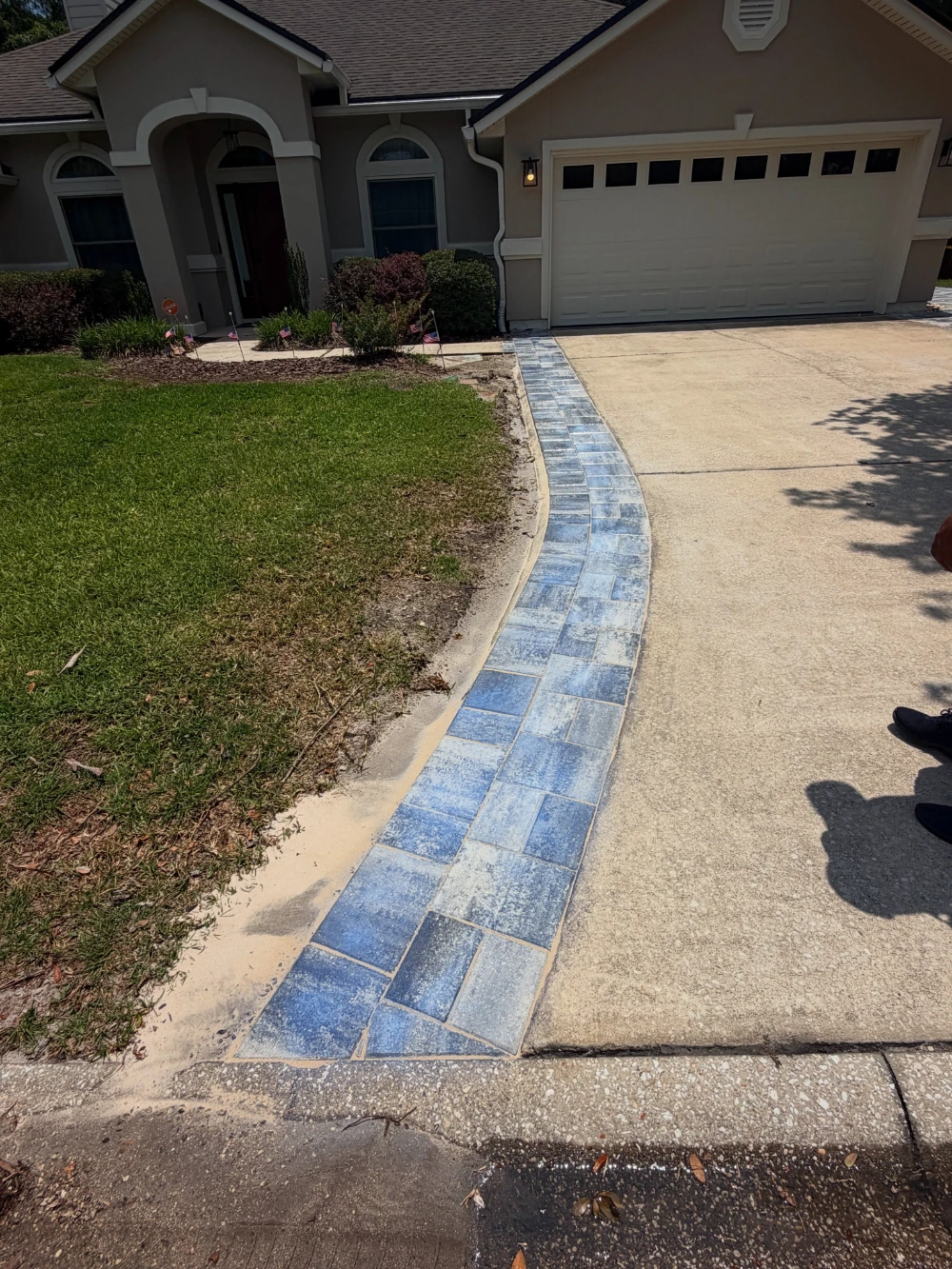
Pavers look like a low-maintenance surface, but Jacksonville’s rainfall works against them in a specific way: runoff, wear, and past cleaning can leave joints short of sand. Joint sand helps stabilize the joints, but a paver that has sunk or shifted may also need base repair. Once enough sand washes out, you start to see weeds taking root in the joints, ants nesting underneath, and pavers that wobble or sink slightly out of place. On top of that, the same algae and mold that affects every other exterior surface here settles into the porous paver material and joint sand, dulling the color and creating a slippery surface, especially around pool decks. Cleaning removes surface buildup; sealing is a separate choice that depends on the paver, its current finish, and the desired appearance.
Signs You Need Paver Cleaning & Sealing
- Faded, dull color compared to when the pavers were first installed
- Weeds or grass growing up between individual pavers
- Pavers that feel loose, uneven, or shift slightly underfoot
- Green or black algae film, especially around pool decks and shaded patios
- Visible gaps where joint sand has clearly washed away
Our Process
1. Surface Cleaning
We clean the paver surface at a pressure level calibrated to remove algae, dirt, and staining without blasting out what joint sand remains between the pavers.
2. Joint Sand Replacement
Where suitable, we replace missing joint sand. Sunken or unstable pavers may require repair beyond cleaning and re-sanding.
3. Drying Period
The surface needs to dry fully before sealing so the sealer bonds correctly instead of trapping moisture underneath.
4. Sealing
If sealing is included in the quote, we choose a compatible product and finish after the pavers are clean and dry. Existing coatings, moisture, and stains must be assessed first.
Why This Matters in Jacksonville’s Climate
With rain a near-constant presence for much of the year, joint sand and coatings should be inspected before resealing, and the same humidity that grows algae on roofs and siding does the same thing to porous paver stone and joint material. Pool deck pavers see this even faster because of the constant splash-out and shade from surrounding landscaping, which is why pool areas are often the first place homeowners notice color loss and joint gaps.
What the Quote Can Include
- Full paver surface cleaning — driveways, walkways, patios, and pool decks
- Joint sand replacement if the joints need it
- Sealing when suitable and selected as a separate line item
- Pressure calibrated specifically to avoid blowing out joint sand
- Weed removal or treatment when appropriate to the agreed scope
Cleaning, Re-Sanding, or Sealing: What Is Actually Needed?
| Condition | Likely next step |
|---|---|
| Surface buildup, joints intact | Cleaning may be enough. A sealer is optional rather than automatic. |
| Missing or worn joint sand | Assess whether joints need re-sanding after cleaning. Check for movement or settling first. |
| Existing sealer is cloudy, peeling, or patchy | Identify the coating and test compatibility. Adding another coat without preparation can worsen the finish. |
| Sunken or uneven pavers | Base or paver repair may be needed; washing and sealer will not level the surface. |
Send photos of both the overall area and the joints or failed finish when requesting a quote. Cleaning, re-sanding, coating removal, and sealing should be separate line items where applicable.
What Affects Your Price
- Total square footage of paver surface
- How much joint sand needs to be replaced
- Sealing is priced as a separate line item from cleaning
- Pool deck areas may require additional care around water features
See our full pricing guide for how we calculate every estimate.
Frequently Asked Questions
Should I seal my pavers in Florida?
It depends on the paver, existing coating, drainage, and the finish you want. Cleaning may be enough; if sealing is suitable, we discuss product compatibility and maintenance before quoting it.
How long does paver sealing last?
There is no single interval for every paver and sealer. Product directions, wear, sun exposure, and the condition of the existing coating determine when resealing is appropriate.
Will cleaning remove the sand between my pavers?
We use pressure levels calibrated to avoid blowing out joint sand, and we re-sand any joints that do need it before sealing.
Can sealing make my pool deck less slippery?
Certain sealers include a slip-resistant additive, which is worth discussing specifically if your pool deck sees a lot of bare feet.
Do you match the sealer finish to what’s already on my pavers?
We’ll assess the current finish and discuss sheen options — matte, satin, or wet-look — before applying, so the result matches your expectations.
How soon can I walk on pavers after sealing?
Light foot traffic is usually fine within a few hours, but we’ll give you a specific timeline based on the sealer used and weather conditions on the day.
Ready for a Free Estimate?
Tell us what you need cleaned and where you’re located — most estimates are turned around the same day.